📍¡SORPRESA EN EL DOJO! La Foto De Esta Entrenadora De Artes Marciales Que Ha Causado Furor En Redes –
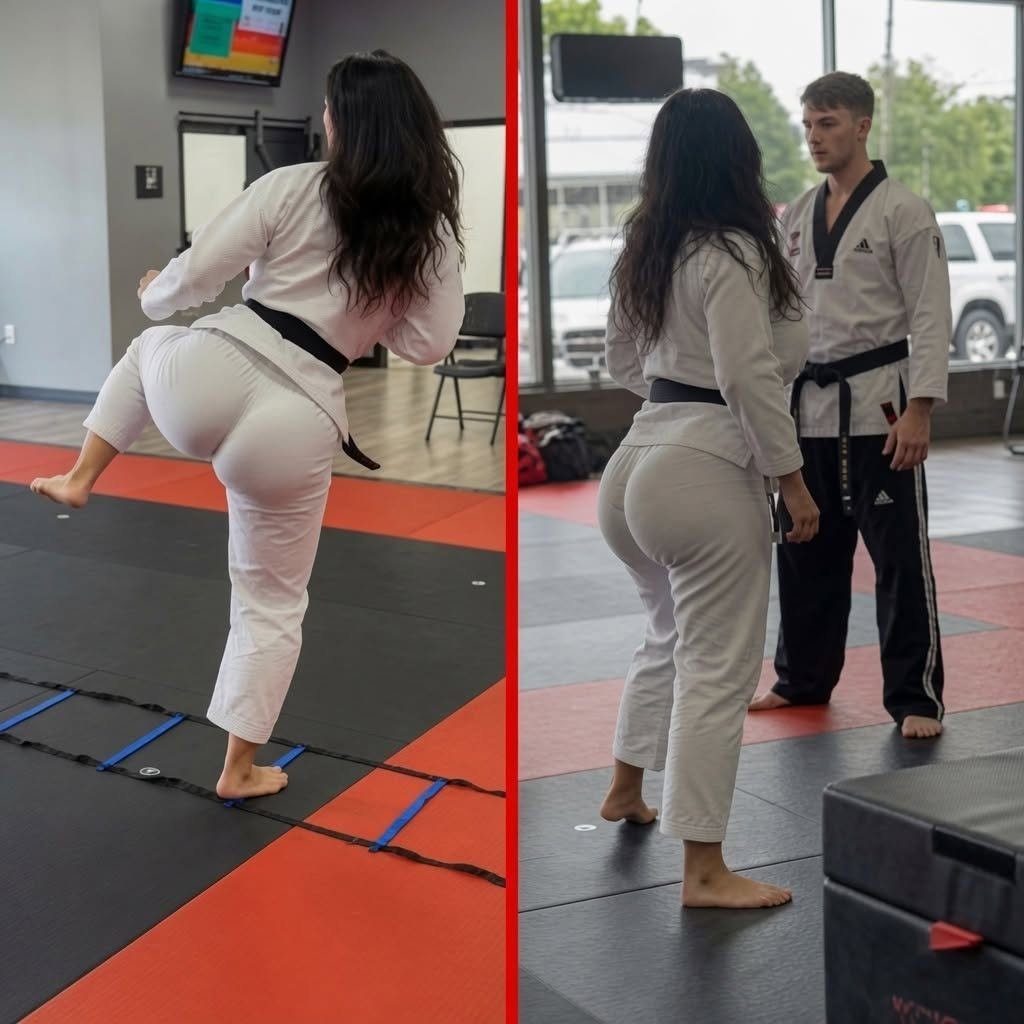
A split-screen photograph featuring a martial arts practitioner demonstrating kicking techniques and training in a dojo environment has generated widespread interest across online platforms, prompting discussion regarding martial arts training methods, physical conditioning, and athletic instruction.
The image presents two distinct perspectives: on the left, the athlete executes a high side-kick drill over an agility ladder; on the right, she stands in a readiness stance opposite an instructor inside a modern martial arts facility equipped with padded matting and training gear.
The Role of Agility Ladders and Footwork Drills in Martial Arts
Agility ladder drills represent a foundational training tool across striking and grappling disciplines, including Taekwondo, Karate, Brazilian Jiu-Jitsu, and Kickboxing. Precision footwork forms the structural baseline for generating striking power, maintaining defensive balance, and managing distance during combat.
Integrating dynamic agility drills into daily practice enables martial artists to refine rapid lateral movements, improve balance retention, and develop fast-twitch muscular responses. Repeating rhythmic footwork patterns builds muscle memory necessary for executing complex kick combinations during live sparring.
Key benefits of incorporating ladder drills into martial arts training include:
- Enhanced Spatial Awareness: Teaching practitioners to maintain precise foot positioning relative to opponents and mat boundaries.
- Improved Kinetic Chain Transfer: Optimizing force transmission from the ground through the hips to maximize striking velocity.
- Increased Ankle and Knee Stability: Strengthening stabilizing ligaments and tendons to reduce injury risks during high-impact strikes.
Biomechanics of High Kicks and Lower Body Conditioning
Executing high kicks with proper form requires a combination of dynamic hip flexibility, core stability, and targeted lower body strength. The side kick demonstrated in the image demands significant activation of the gluteal muscles, hamstrings, quadriceps, and abdominal stabilizers.
Proper kick chambering—bringing the knee high toward the chest before extending the leg—ensures maximum reach and striking power while preserving defensive balance. Controlled hip chambering prevents telegraphing movements, giving opponents less time to react or counter.
Essential biomechanical components of effective kicking techniques include:
- Pivot of the Support Foot: Rotating the standing heel toward the target to open the hips and align the pelvis correctly.
- Core and Hip Engagement: Activating the transverse abdominis and gluteus medius to stabilize the torso during leg extension.
- Chamber and Recoil: Retracting the striking leg along the same path to return instantly to a balanced defensive guard.
Instructor Dynamics and Technical Correction in Martial Arts
The relationship between student and instructor forms the cornerstone of traditional and contemporary martial arts education. Direct observation during practice sessions allows coaches to identify subtle mechanical errors, refine stance alignment, and offer real-time technical corrections.
Having an instructor present during drilling ensures practitioners maintain proper form under fatigue, minimizing bad habits that compromise technique. Interactive coaching fosters disciplined practice habits, technical precision, and continuous skill progression.
Modern Dojo Facilities and Training Equipment
Contemporary martial arts studios utilize specialized equipment designed to enhance safety and training efficiency. High-density EVA foam matting provides essential impact absorption, protecting practitioners’ joints during repeated landings, takedowns, and footwork drills.
Facility features visible in modern dojos include high-impact plyometric boxes, heavy bags, agility training ladders, and specialized uniform apparel (doboks or gis). Quality equipment creates a professional, controlled environment suitable for practitioners of all skill levels.
Physical Conditioning and Athletic Longevity in Combat Sports
Sustaining high-level performance in martial arts requires comprehensive physical conditioning that extends beyond basic técnica practice. Elite practitioners incorporate strength training, cardiovascular endurance work, and active mobility routines into weekly schedules.
Cross-training builds muscular endurance, preventing joint wear and reducing injury occurrence over long training careers. Prioritizing recovery, flexibility work, and balanced nutrition ensures long-term physical longevity for dedicated martial artists.
The Visual Impact of Training Media in Digital Sport Culture
Sharing authentic training footage and step-by-step technique tutorials on digital platforms plays a key role in promoting martial arts disciplines to broader global audiences. High-quality imagery highlights the athletic dedication, technical skill, and hard work required in martial arts.
Visual media inspires aspiring practitioners, demystifies training routines, and encourages broader participation in health and self-defense programs worldwide. Social media platforms serve as modern digital hubs for martial arts communities to share training insights and celebrate athletic achievements.
The History and Evolution of Taekwondo Uniforms and Belt Systems
The uniform worn in traditional Korean martial arts such as Taekwondo, known as a V-neck dobok, carries deep historical significance and practical functionality. Designed to allow complete freedom of movement during high kicks and rapid footwork, the dobok consists of lightweight, durable fabric tailored for intensive athletic training.
The belt system worn around the waist symbolizes a practitioner’s progression, technical mastery, and philosophical journey within the art. Ranging from white belt for beginners to black belt for advanced practitioners, each rank represents hundreds of hours of dedicated training, discipline, and personal growth.
Black belts signify both technical competency and a commitment to mentorship. Senior belt holders frequently assist instructors in guiding junior students, preserving martial traditions while fostering community support within the school environment.
Flexibility Training Methods for Martial Artists
Developing exceptional leg flexibility is a primary goal for striking martial artists who aim to execute head-height kicks with speed and control. Flexibility training relies on a combination of static stretching, dynamic warm-ups, and proprioceptive neuromuscular facilitation (PNF) techniques.
Dynamic stretching performed before workouts prepares muscles and joints for explosive movements by increasing blood flow and core body temperature. Active leg swings, hip circles, and mobility drills gradually expand functional range of motion without decreasing muscle power output.
Static stretching and PNF stretching after training help lengthen muscle fibers, reduce post-workout soreness, and improve baseline joint mobility over time. Consistent flexibility work protects practitioners from hamstring pulls and groin strains during high kicks.
Mind-Body Connection and Mental Discipline
Martial arts practice extends far beyond physical exercise, emphasizing mental discipline, focus, and emotional self-control. The rigorous demands of technical drilling train practitioners to maintain calm concentration under physical exertion and pressure.
Developing mental resilience enables martial artists to navigate challenging training sessions, overcome technical plateaus, and maintain composure in competitive or self-defense scenarios. Mindfulness practices integrated into training cultivate mental clarity and sharp spatial awareness.
This holistic approach to training fosters life skills that translate outside the dojo, including improved stress management, enhanced goal-setting capabilities, and strong personal perseverance in daily professional and personal endeavors.
Self-Defense Applications of High Kicking Techniques
While high kicks are frequently highlighted in sports competitions and martial arts demonstrations, their application in real-world self-defense situations requires careful tactical consideration and risk assessment.
High strikes carry high power and unexpected reach, but they also expose the practitioner’s balance and leave the standing leg vulnerable to sweeps or takedowns. Instructors emphasize mastering low and mid-level kicks for practical defense while reserving high kicks for specific opportunistic openings.
Understanding when and how to deploy specific techniques reinforces effective self-defense strategy. Training under qualified instruction ensures practitioners learn both the physical execution and tactical decision-making needed for real-world personal safety.
Nutrition and Recovery Protocols for High-Impact Martial Arts
Fueling the body for intensive martial arts training demands structured nutrition and recovery strategies. High-intensity kicking, footwork drills, and sparring burn significant caloric energy and place demands on muscular tissue.
A balanced diet rich in complex carbohydrates, lean proteins, and healthy fats supports optimal energy levels and muscle repair. Hydration is equally critical, as fluid loss during vigorous training can impair reaction time, coordination, and muscular endurance.
Prioritizing adequate sleep, active recovery days, and foam rolling supports tissue regeneration and prevents overtraining syndrome, keeping athletes healthy and performing at peak capacity.
The Global Growth of Martial Arts Fitness Programs
In recent years, martial arts-inspired fitness programs have experienced explosive growth worldwide, appealing to individuals seeking engaging alternatives to conventional gym workouts. Cardio kickboxing, fitness Taekwondo, and bag-striking classes combine martial techniques with energetic cardiovascular conditioning.
These programs offer accessible entry points for fitness enthusiasts of all ages and backgrounds, providing full-body workouts that build strength, burn calories, and improve coordination without requiring full contact sparring.
The popularity of martial fitness highlights the versatile appeal of combat sports concepts, demonstrating how traditional training methods adapt to meet contemporary health and wellness goals.
Community Building and Inclusivity in Modern Dojos
Modern martial arts schools serve as vital community hubs where individuals of diverse ages, backgrounds, and skill levels train together toward shared goals. A supportive dojo environment fosters camaraderie, mutual respect, and inclusive encouragement.
Training alongside peers creates strong bonds built on shared effort and mutual achievement. Dedicated instructors cultivate positive culture by celebrating individual milestones, encouraging mentorship, and maintaining a welcoming environment for every student.
By emphasizing respect, discipline, and community support, martial arts schools empower students to build confidence, forge lasting friendships, and achieve personal growth both on and off the mat.
The Future of Digital Training Platforms and Martial Arts E-Learning
The integration of digital technology into martial arts instruction has opened new avenues for remote learning, technique analysis, and global community engagement. Online instructional platforms, video analysis tools, and virtual seminars allow practitioners to supplement local dojo training with expert guidance from international masters.
Digital platforms enable detailed slow-motion breakdowns of kicking mechanics, footwork drills, and self-defense applications, making high-level technical knowledge accessible to students worldwide. Combining traditional in-person instruction with digital learning resources accelerates technical mastery, expanding the reach and preservation of martial arts arts for future generations.
In conclusion, this dynamic split-screen photograph offers a compelling glimpse into the dedication, precision, and structured conditioning that define modern martial arts training. From executing high-chambered kicks over agility ladders to working directly with instructors in state-of-the-art dojo facilities, the images highlight the harmonious blend of physical strength, technical mastery, and disciplined coaching. As martial arts continue to evolve through modern fitness adaptations, digital learning tools, and inclusive community building, the core values of respect, perseverance, and lifelong learning remain steadfast. Whether practicing for self-defense, athletic competition, or personal fitness, dedicated practitioners demonstrate that mastery is a continuous journey built upon consistent effort and proper guidance. Ultimately, these captivating training moments serve as an inspiring testament to the enduring power of martial arts to cultivate physical excellence, mental resilience, and strong community connection.